
PRESIDENT SAMIA: ELECTRIFY ALL HAMLETS

15 Feb 2023 Sheila Mfunami
After registering significant strides in rural electrification, the government has now set focus on hamlets, targeting to ensure more people have access to electricity than ever before. The government is also embarking on a National Grid Stabilisation project to alleviate power outages in the country. Despite the achievements, President Samia Suluhu Hassan noted that much work ought to be done in order to connect all hamlets, the majority of which had yet to benefit from the government’s excellent work. Speaking yesterday at the State House in Dar es Salaam during the signing ceremony for National Grid Stabilisation and improvement of rural electrification projects, President Samia stated that out of the 64,760 hamlets nationwide, only 28,424 are connected to electricity, equivalent to 43.9 per cent. “While we boast that all villages will have electricity by December this year, which indicates that electricity will reach every village, we still have a lot of work to do to supply electricity to all the hamlets,” she noted. Although we won’t complete all the hamlets, “this is the task that we are going to accomplish most aggressively right now,” Dr Samia added. The Ministry of Energy has come up with an idea on electrifying hamlets and is putting together a proposal to be presented to the government, to be discussed, and to see what can be done. Their idea is to use domestic revenue in implementing that project, but there are development stakeholders who can also help, according to President Samia. President Samia yesterday witnessed the Tanzania Electric Supply Company (Tanesco) signing 26 contracts for the National Grid Stabilization project worth 1.9tri/- that will be implemented in phases. She also witnessed the Rural Energy Agency (REA) signing 14 contracts for improvement of rural electrification and connecting small-scale miners, health centres, agricultural projects, small-scale industries and water sources to power. “Starting with the grid project, the government has set aside 400bn/-, and we received 100bn/- from the International Monetary Fund (IMF) for this year and we now have the funds to carry out this project while other projects have already gotten underway,” according to Dr Samia. She further said that the 4.42tri/- project, which will be carried out for four years in various regions, will include, among other things, the construction of 14 grid substations, the purchase of 700,000 prepaid electricity metres (Luku), and the acquisition of 27 power transformers. “These initiatives are linked because it will be impossible to successfully distribute electricity throughout the communities without strengthening the national grid. These initiatives complement one another as we strengthen the system and provide electricity to the villages,” she said. When the rural electrification project is completed, she continued, “We are dedicated to deliver development in rural and urban areas, therefore, when this project is completed, another service that we are determined to deliver to rural areas is ICT.” Earlier, Minister for Energy January Makamba, stated that some projects on the grid stabilisation have already begun, including the project to connect Katavi Region to the national grid and the Nyakanazi-Kibondo-Kasulu project. “This is the first phase, for those who have electricity challenges and their areas are not mentioned here; don’t worry because other phases are coming. We have started like this to be able to manage the project well,” minister Makamba said. According to Mr Makamba, the CAG report of 2019 indicated that dilapidated infrastructure and poor maintenance were the reasons behind regular power outages in the country. In search of solutions, the minister said, they came up with the Tanzania-Zambia (Taza) power interconnection project, North East Grid, South West Grid and Grid project; these are major infrastructure projects of electricity transmission. He further said Tanzania has 6,000 kilometres of main electricity transmission lines and the need is 12,000 kilometres. “When we say we produce 1,700 megawatt of electricity and we see that it is enough, we mean that many people have not been reached in the country. The more people have access to electricity the more demand emerge,” he said. He added, “We will reach 5,000 megawatts of electricity production by 2025 due to the production projects in Kakono, Malagarasi, Rusumo and the gas project will give us 600 megawatts and the Kishapu solar energy, which will produce 150 megawatts will all be included in the national grid by next year.” He said the ongoing construction of Julius Nyerere Hydroelectric Power Project (JNHPP) will generate 2,115 megawatts. REA Director General Engineer Hassan Saidy said the 14 signed contracts will benefit 25 regions, with the projects mainly targeting to connect electricity to health centres, water projects, small-scale miners and farmers in rural areas. “In partnership with the EU and France, we have set aside 385bn/- to carry out three significant projects, for which we have signed implementation agreements today. As a result, 1,522 hamlets in nine regions would gain access to power, benefiting 88,200 people,” he said. Eng Saidy said another project is to deliver electricity to mining and agricultural projects, which will deliver services to 336 locations in 25 regions of mainland Tanzania. A total of 63 health centres and 333 water pumps will benefit from the project. “Until now, 69 per cent of the villages have been connected to electricity; out of 12,345 villages countrywide, 9,467 are connected to electricity and we have 2,878 villages left. Contractors are continuing with their work in various areas,” Eng Saidy explained. more details ...

ALIGN PLANS WITH GOVT, DEVELOPMENT PARTNERS URGED

15 Feb 2023 Sheila Mfunami
Tanzania has urged development partners to align their efforts with the government to avoid duplication of efforts in the county’s development and priorities. Minister for Finance and Planning, Dr Mwigulu Nchemba said on Tuesday that the joint efforts put in by development partners and the government will bring productivity to Tanzanians who are the biggest beneficiaries of all the programmes. Minister Nchemba said this during the opening of a high-level strategic dialogue meeting yesterday in Dar es Salaam. Dr Nchemba said a high-level strategic dialogue meeting between the government and development partners is held twice a year, with the aim of giving feedback on the measures taken by the government, which include reviews of the budget. The minister said Tanzania’s economy is doing well and is heading in the right direction, saying that the country’s GDP grew by 5.2 per cent in the first three quarters of last year, portraying a strong performance of attaining the projection of 2022 based on the quarter four happenings. He said the government’s achievements were due to various factors, including the amendment of some laws that have created a conducive environment of doing business. Dr Nchemba further said that the government’s decision to provide subsidy of fuel and fertilizer as well as investing heavily in production sectors including agriculture is significantly paying off. “The achievements include increased domestic resource mobilization from 17,944.9bn/- in 2017/18 to 24,395.7bn/- in 2021/2022, increased recognition, cooperation and participation of Civil Society Organizations (CSO) and private sector in development processes as evidenced by the establishment of different policies, including Public Private Partnership (PPP) policy as well as establishing the designated PPP Unit, which develops robust policies and regulatory frameworks to facilitate PPP projects,” he said. Dr Nchemba said despite the achievements attained, there are challenges to be considered, including lack of transparency on some of the assistance channeled through NGOs, which undermines mutual and domestic accountability. Furthermore, Dr Nchemba highlighted the importance of nurturing development cooperation, in particular during times of uncertainties, to jointly address development challenges, including climate change, business environment, energy, food security, blue economy and infrastructure development. He said the government is committed to development cooperation as it continues to strive to attain goals set in the development vision. On his part, the British High Commissioner to Tanzania and Development Partner’s Group Co-chair, Mr David Concar said Tanzania’s economy is recovering from Covid-19. He said the two years of President Samia Suluhu Hassan have clearly shown that Tanzania has succeeded in renewing important regional and international relationships, while also making progress domestically on political reconciliation and reaffirming its reputation for economic and social stability. Mr Concar said they recognise the efforts being made by Tanzania to complete major infrastructure projects. “We also value the country’s continuing partnership with a wide range of UN agencies. We applaud the openness Tanzania has shown to harnessing fully its partnership with IFIs such as the IMF and World Bank,” said Mr Concar. He added that this is exemplified by the IMF’s approval last year of a substantial 1 billion dollar + Extended Credit Facility to assist Tanzania’s economic recovery and reform agenda and more recently by the World Bank’s approval of a 500million US dollars IDA credit to support policy reforms, and 275million US dollars in credit and grant funding for maternal and child health investment. Moreover, he said the aid is rightly provided to support Tanzania to meet its national development goals as set out in the country’s Third Five-Year Development Plan and Vision 2025, and in the context of Tanzania’s Development Cooperation Framework. “To that end, the agenda we have agreed on is rightly ambitious in scope. It focuses on areas and objectives that are priorities for the government, which include women economic empowerment, transforming the rural economy through climate resilient agriculture and energy access as well as investing in the health and education of the predominantly young population,” he said. In addition, he said critical to achieving all of those, is the goal of turning the country’s business environment and private sector into an engine of growth and job creation more details ...

EU LIFTS BAN ON TANZANIA – GROWN BITTER GOURD FRUIT

14 Feb 2023 Sheila Mfunami
The European Union (EU) has lifted a blanket ban on Tanzania’s grown bitter gourd to access its lucrative markets, breathing a sigh of relief to local farmers and exporters. In November 2022, EU reported to have detected presence of quarantine pest hosted in the MomordicaCharantia, prompting the European Commission to prohibit the bitter gourd crop export into EU markets, hitting hard a multi-million-shilling industry. Tanzania being a producer of bitter gourd fruit between January 2021 and July 2022, exported around 220 metric tonnes of the crops to United Kingdom, Netherlands, Italy, Belgium and Switzerland, earning the economy 691,000 US dollars (about 1.5bn/-). Tanzania was required to present before the EU the pest surveillance report proving the absence of ThripspalmiKarny for it to be allowed to export the fruit to the EU markets. As it happened, the country’s key driver of horticulture industry, TAHA through the United Nations Development Programmes (UNDP) funded Horticulture Transformation for Inclusive Growth (HOTIGRO) had to intervene working closely with Tanzania Plant Health and Pesticides Authority (TPHPA) in conducting pest surveillance in all bitter gourd producing areas in Tanzania. TAHA’s Chief Executive Officer, DrJacqueline Mkindi said that during the pest surveillance, samples were taken from the farmers and presented to the laboratory for test analysis to substantiate whether they have the ThripsPalmiKarny or otherwise. “Fortunately the results from the surveillance indicated that Tanzania is free from ThripspalmiKarny, and that the bitter gourd are produced in an area that is free from Spodopterafrugiperda”DrMkindi explained. Then, the pest surveillance report was submitted to the EU for their consideration and lifts the ban on export of Tanzanian grown bitter gourd fruit to its markets. “After reviewing the pest surveillance report, the Plant Health Unit under the European Commission declared Tanzania to be eligible to export bitter gourd fruit to the EU under condition (a) of point 71 of Annex VII of Commission Implementing Regulation (EU) 2019/2072”DrMkindi said. Indeed, the European Commission congratulated Tanzania for reaching the important milestone in the phytosanitary certification system in compliance with the EU phytosanitary requirements. “With your written communication notifying the commission that Tanzania is free from ThripspalmiKarny, Tanzania is therefore, eligible to export bitter gourd fruit to the EU,” reads a statement wrote by a policy officer in the Directorate-General for Health and Food Safety (DG SANTE) of European Commission, Dr Leonard Shumbe. Bitter gourd farmers in Tanzania, one of evolving Africa’s top fruits growers and exporters to the EU, have welcomed renewed exports to Europe, saying the blanket outlaw was a blow to them who had started to venture into the value chain since 2021 when it was introduced in country, thanks to the key industry country’s driver TAHA. Prospects were high that farmers would raise their glasses to toast for windfall earnings, after the industry’s flamboyant driver, TAHA, had successfully unlocked a lucrative EU’s market for bitter gourd fruit only to find themselves in a quagmire after the EU ban. In its efforts to capture international markets, TAHA through the HOTIGRO project had embraced a bitter gourd with high demands in Germany and UK, owing to its nutritional values. “We’ve added a bitter gourd in the list of our commercial and high horticultural value chain” she said, adding: “As a result from December to mid February 2022, TAHA facilitated farmers to export over 44 metric tonnes of bitter gourd to Germany, fetching them 60m/- directly and the economy 132,000 US dollars, implying that the crop is highly lucrative”. Dr Mkindi said that before the EU export ban projections were that local farmers would have been exported 350 metric tonnes between February and June, earning them 472.5m/- directly and the economy 1.05 million US dollars. In the same season, the bitter gourd value chain would have been created 750 employments, 90 percent being the women and youth who would have earned emoluments worth 45m/-, TAHA boss said. In the November 2022 and May 2023 season, the bitter gourd farmers were expected to export 1,400 metric tonnes and earn them 1.8bn/- and the economy 4.2 million US dollars,TAHA projections show. more details ...
More News
More Events
Back

DAR, KINSHASA SGR DEAL: EABC sees trail to prosperity

25 Oct 2022
DAILYNEWS
Image

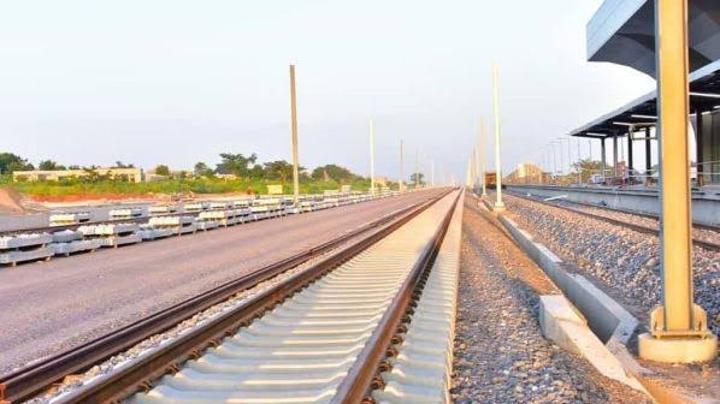
Enisaged construction of a standard gauge railway (SGR) from Kigoma in Tanzania to DR Congo through Burundi is set to massively boost regional trade within the East African Community (EAC).

Trade and Policy Advisor of the East African Business Council (EABC), Mr Adrian Njau told the `Daily News’ in a telephone interview yesterday, that the project would propel trade in member states of the EAC.

“Construction of the railway line to connect the port of Dar es Salaam to the hinterland in Burundi and DRC is a very good initiative which will boost trade among these countries.

“We really need to construct transport infrastructure to enable EAC countries to improve trade among ourselves. The railway line to Burundi and DRC will enhance regional trade value chain among the member states of the EAC,” he commented.

Mr Njau cited lack of a reliable infrastructure between the coast in Tanzania and its land-linked neighbours as among major challenges facing trading among countries in the region and thus the need for construction of infrastructure to link the countries.

Mr Njau added further that apart from the SGR, Tanzania should also extend its national fibre optic network to tap on opportunities in Information and Communication Technology (ICT) in DRC.

Speaking during the visit by the President of DRC, Mr Félix Tshisekedi, on Sunday, the President Samia Suluhu Hassan, stated that the two countries have agreed to cooperate on infrastructure and transportation.

Ms Samia told a news conference after a meeting with President Tshisekedi that Finance Ministers of Tanzania and the DRC met in the United States with the International Monetary Fund (IMF) and the World Bank and agreed to apply for a joint loan to complete construction of SGR from Kigoma to the DRC via Burundi.

President Samia and her counterpart agreed to work together in a number of areas to boost trade between the two nations.

Trade, investment, infrastructure, finance in addition to energy, education, defence, security, and immigration are just a few of the areas where Tanzania and the DRC plan to work together.

“We looked at the trade volume, which has been very low for the last ten years, but if we can do what we agreed in those areas, then it will grow,” stated President Samia shortly after the two leaders’ bilateral talks.

During their discussions, the two leaders reaffirmed their common commitment to strengthening the spirit of solidarity and brotherhood between the two countries and their people.

In terms of trade, she stated that following her visit to the DRC in August 2022, Foreign Ministers of both countries were instructed to call an urgent meeting of the Joint Commission, which had not met in nearly 20 years since 2002.

“I am delighted to announce that, as a result of our efforts, the commission met in September this year and adopted 50 resolutions, as well as signing a Memorandum of Understanding (MoUs) on defence and security, infrastructure and transport, trade and investment, relations and social cooperation between Tanzania and the DRC,” President Samia said.

Meanwhile, President Tshisekedi and his Zanzibar counterpart, Dr Hussein Mwinyi, have agreed to strengthen relations in several areas, following his short trip to the islands over the weekend.

According to the press release from the Zanzibar State House yesterday, the two leaders met at the State House where they discussed how to improve tourism, investment, and trade. Some business people from DRC have been coming to Zanzibar to buy dried sardines.

During the talks, Dr Mwinyi said they were looking for stronger cooperation in various areas.

“We want to see business in seafood booming. It is high time you promote Zanzibar when you get back home. Both tourism and trade environments have improved in Zanzibar,” he said.

President Tshisekedi thanked Dr Hussein Mwinyi for the good reception in Zanzibar. He visited Mkunazini former slave market in the Stone Town before a short town tour after which he promised to come back to Zanzibar with a family for a short holiday in future.

“We have to strengthen our relations and good neighbourhoods with Tanzania. We have a lot to share in trade and culture, an opportunity for our people,” he said.


What color is not part of the Tanzanian Flag
a. Red
80%
b. Green
20%
c. Blue
0%
d. Black
0%
Total Votes: 5